
 EN
 IT
 ES
 FR
 ZH
Momificación del Antiguo Egipto: La Ciencia Sagrada del Más Allá y los Cultos Animales
La Resurrección Osiriana y la Embalsamación Real Temprana
funerary beliefs and practices observed the state of preservation of some of these early burials, conditions they tried to duplicate when carrying out their own. No definite treatise on mummification exists, but as belief in Osiris grew, and as his powers became diversified (originally only the rulers and ruling classes benefitted from his ministrations), so did the belief in resurrection spread. The Greek authors who were inter-ested in embalming inform us that mummification took about 70 days, but there is one case of an Old Kingdom queen which took about 285 days, perhaps because her tomb-chapel was not ready. Evidence for the commencement of embalming is uncertain. Already by the 3 Dyn. the body was being dismembered and the limbs wrapped to represent the living body, but by the 4 Dyn. it was certainly taking place, and one of the earliest examples known is that of Hetepheres, mother of Khufu, builder of the Great Pyramid. Although her body was missing from her tomb, the box containing the canopic jars (see below) was present, evidence that she must have been embalmed.
La ciencia de la preservación: natrón, vino y ataduras sagradas
Very few mummies have remained from the Old and Middle Kingdoms, but by the New Kingdom the main methods used to preserve the body were understood. The word mummy comes from the Arabic mii.mmiya (bitumen), the material in which bodies were later soaked in an effort to preserve them, and has really nothing to do with the Egyptians' earlier efforts. The method seems to have been a dry process in which the soft parts of the body like the stomach, intestines and liver, were taken out and placed either in jars or wrapped in bundles; the brain was also usually removed but not the heart. Natron was used to purify and preserve the body, the body cavity was washed out with palm wine, and the body stuffed to preserve its contours. Various methods were used at different times, those of the 18 and 19 Dyns being most effective, while those of the 21 Dyn. were the most elaborate. After the body had been dried, washed and wrap-ped, it was covered with an intricate pattern of cross strapping and for protection had various amulets placed upon it. The most import-ant was probably the heart scarab, which contained a short inscrip-tion from the Book of the Dead, while among the dozens of others, many intended solely for funerary purposes, the two principal ones were the djed pillar of Osiris and the thet girdle of Isis.
Los Secretos Canópicos: Los Cuatro Hijos de Horus y Sus Guardianes
Ya se ha mencionado las vasos canópicos en los que se colocaban las vísceras. El término canópico es un nombre inapropiado derivado de Canopo, la ciudad donde se decía que habían muerto y sido enterrados los marineros de Menelao, y más tarde se adoraba como un frasco con cabeza humana. Los primeros vasos canópicos solo tenían una tapa y estaban hechos de cerámica o piedra, pero en el Reino Medio y Nuevo tenían cabezas humanas que representaban al fallecido, las cuales fueron más tarde reemplazadas por los cuatro hijos de Horus: Duamutef (chacal) protegiendo el estómago, Gebehsenuf (halcón) los intestinos, Hapi (babuino) los pulmones, e Imsety (humano) el hígado. Cada una de estas deidades menores estaba bajo la protección de una de las cuatro diosas de los muertos: Neith, Selket, Neftis e Isis.
Bestias Sagradas del Nilo: Cultos Animales y el Serapeo
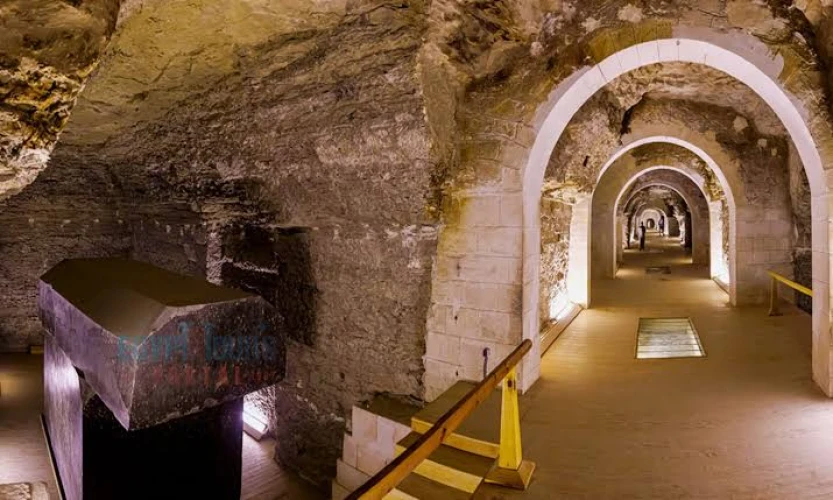
Los egipcios también momificaban ciertos animales, por ejemplo los toros Apis y Mnevis, y el ibis y el babuino sagrados para Thoth. Los entierros de los toros Apis son los más conocidos, ya que se pueden ver en Saqqarah.
en el Serapeum, y su lugar de embalsamamiento, completo con enormes mesas de alabastro, se encontró en Memphis cerca del Templo de Ptah en 1951. La mayoría de las momias de animales que sobreviven pertenecen a períodos posteriores, pero es obvio que la adoración de animales, particularmente el culto al toro, es de origen antiguo