
 English
 Italy
Italy
7-Day Egypt Itinerary: The Perfect Route Combining Cairo Highlights and a Nile Cruise
The Timeless Highway: The Ultimate 7-Day Egypt Itinerary (Cairo, Luxor, Aswan & Nile Cruise)
Egypt is one of those rare travel destinations on earth that kinda captures the human imagination in a way that’s hard to describe. The moment you start planning your trip, your brain fills up with images of massive ancient pyramids pushing up through the desert dust , huge stone temples watched over by colossal statues, and that calm life-giving flow of the Nile River like it’s almost whispering something.
Now, if you only have one single week to experience the very best of this historic land, you might honestly feel a bit swamped trying to squeeze thousands of years of history into just seven quick days. The trick for a great trip is not luck, it’s a nicely structured, efficient route that follows the historic trail of the pharaohs from the energetic swirl of Cairo down into the quieter, scenic atmosphere of Upper Egypt. Here’s the full 7-day Egypt itinerary, day by day, that blends a classic Nile cruise with major archaeological highlights, so you end up making the most out of every single moment on your journey.
Day 1: The Threshold of Antiquity (Giza & Cairo)
Your Egyptian adventure kind of starts in Cairo, this huge metropolis where the ancient and the newer stuff bump into each other in this very vivid, high-energy symphony. After you drop your luggage at the hotel, go right away toward that plateau which basically keeps drawing visitors for thousands and thousands of years: The Great Pyramids of Giza.
You know, standing at the base of the Pyramid of Khufu, the only thing left of the ancient wonders, feels really humbling. Take your time climbing the rough incline, keep looking up at those enormous limestone blocks, and try to snag the usual panoramic shots from the high desert dunes.
Not too far down the plateau, you’ll run into the legendary Great Sphinx, the mythical guardian with the lion body and the pharaoh head, watching over the eastern horizon like it never really sleeps. Spend your afternoon at the fresh Grand Egyptian Museum (GEM) , or if you prefer something more traditional then head to the Egyptian Museum in Tahrir Square , where you’ll find a jaw-dropping mix of golden sarcophagi, royal mummies, and ancient artifacts. Finish the day with an evening meal of Koshary at a nearby spot. It’s Egypt’s top comfort plate, you know, pasta, rice, lentils, and a spicy tomato sauce , in one warm bowl.
Day 2: The Open-Air Museum (Fly to Luxor & Valley of the Kings)
On your second morning, take a quick, one hour domestic hop from Cairo to Luxor , a calm southern place built right on top of the remains of ancient Thebes, the grand capital of the New Kingdom. When you land, you cross to the West Bank of the Nile, which has long been thought of as the land of the dead, and where the sun drops behind those jagged desert hills.
Your main stop is the Valley of the Kings , a secluded gorge tucked deep in the limestone mountains where pharaohs were interred in ornate, underground rock cut tombs for more than 500 years . Walking into these chambers is a total eye opener; since they stayed sealed from light and dampness for ages, the bright blues , yellows, and reds on the surfaces look almost like they were brushed on yesterday.
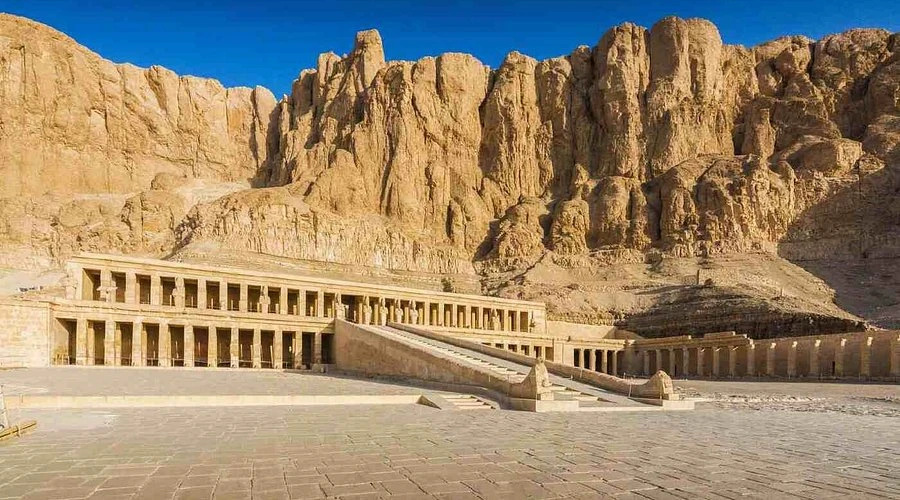
Most tickets cover entry into three separate tombs, yet it’s honestly better to pay a little more so you can step inside the celebrated tomb of King Tutankhamun. After you’ve wandered through the valley, you make short, quick pauses at the spectacular, multi level Mortuary Temple of Hatshepsut and the tall Colossi of Memnon, and then you check in to your classic Nile cruise ship , basically a floating boutique hotel for the next few nights.
Day 3: The Monuments of the Living, luxury egypt tours (Karnak & Luxor Temples)
Wake up a bit early on day three, so you can catch the sunrise up on the top deck of your cruise ship. Today is basically for wandering around Luxor’s magnificent East Bank, the world of the living, where ancient Egyptians did, you know , their faithful worship of their main gods.
Your first stop should be Karnak Temple, which is the largest religious complex ever built by people. When you step into the Great Hypostyle Hall—this huge collection of 134 colossal sandstone columns rising over 60 feet into the sky—you’ll feel your breath get stuck. Then take your time with a slow walk along the Avenue of Sphinxes, a recently restored 2-mile stretch, it used to link Karnak straight to what you’ll see later in the afternoon: Luxor Temple. Luxor Temple sits right in the middle of the modern city, and it’s honestly especially magical late in the day, when the setting sun paints a warm, golden sheen over its massive statues of Ramesses II. By evening, your cruise ship loosens up its ropes and starts a calm voyage south, drifting toward the town of Esna.
Day 4: Sailing the Historic Current (Edfu & Kom Ombo)
As you wake up on day four, you kinda feel like, you are fully immersed in the slow, calm rhythm of life along the Nile. Today is a mix of lazy cruise vibes and some very particular riverside sightseeing, in a way that feels almost unreal but still simple.
Your ship will dock in the morning at Edfu, and then you’ll step into a traditional horse-drawn carriage, rolling through the busy streets , to reach the Temple of Edfu. It is dedicated to the falcon god Horus. It was built during the Ptolemaic period, and this temple is honestly the most perfectly preserved in all of Egypt, with a roof that is still intact. That means the blinding desert sun gets blocked, so you get these dramatic, cool shadows drifting across the hieroglyphic chambers, like it was planned for mood.
After that you go back to the ship for a huge lunch buffet, then spend the afternoon just lounging by the pool up on the sun deck. You watch rural Egyptian life glide quietly past the riverbanks , and it feels slow in the best way. Later, in the late afternoon, the ship docks right by the Temple of Kom Ombo , which is a rare double-temple set symmetrically on a pretty bend in the river. One side is for Sobek the crocodile god, and the other side is for Horus the falcon god, so it’s like two sacred worlds sharing the same stone. And don’t skip the unusual Crocodile Museum next door, it has dozens of ancient mummified Nile crocodiles, found nearby and kept there for you to see.
Day 5: The Nubian Soul (Aswan & Philae Temple)
By the morning five, your cruise ship will get to its last place: Aswan, that stunningly beautiful southern spot where the golden desert dunes slide right down into the deep, clear blue water of the Nile, sort of sprinkled with smooth black granite boulders and white-sailed felucca boats .
Your early excursion you take by motorized water taxi, straight to the island Temple of Philae, devoted to the goddess Isis. It was rescued from the higher waters of Lake Nasser through a huge UNESCO rescue project, so the temple is often thought of as one of the more romantic and also visually breathtaking places in the whole country .
In the afternoon , feel that warm , lively hospitality of the south by doing a boat ride to a traditional Nubian village. These homes are painted in bright, vivid shades of blue yellow and pink, and they give you a great chance to understand the unique culture, the language, and the craft work of the Nubian people. You can taste local hibiscus tea, and see a completely different side, of Egyptian life.
Day 6: The Giant of the Desert (Abu Simbel & Return to Cairo)
This one is, by far the most physically demanding day of the whole itinerary, yet it kind of pays you back with one of those extremely spectacular sights on the planet. Get up for a pre dawn departure, so you can do the 3 hour crossing through the open Sahara desert (or, if you prefer, a quick 45 minute flight) and reach Abu Simbel, it s near the southern border of Egypt.
There, carved straight into the face of a huge mountain cliff, you ll find the twin temples of Ramesses II and his cherished queen Nefertari. The big, main temple entry is guarded by four gigantic, 65 foot tall statues of Ramesses, he is seated on his throne, staring out across Lake Nasser with pure majesty like nothing else.
As with Philae, the entire rocky structure was carefully cut into sections and lifted about 200 feet higher in the 1960s, so it wouldn’t get swallowed by floodwaters. Once you ve stood there in awe before these desert giants, head back to Aswan in the afternoon then board a domestic flight, continuing on to Cairo for your last night in the capital.
Day 7: The Heart of the Capital (Old Cairo & Farewell)
Spend your last day kind of just immersing yourself in the rich Islamic and Coptic history of Old Cairo. You know, start with a morning walk through those quiet, very ancient stone churches in Coptic Cairo, including the famous Hanging Church , built directly over the bastions of an old Roman fortress.
Then in the afternoon, wander into the chaotic, sensory-rich maze that is Khan El Khalili bazaar. It’s this historic market, still operating since the 14th century, and honestly it’s the ultimate spot to grab souvenirs , like local spices, handmade leather bags, silver jewelry, and those intricate brass lamps.
Later, find a small seat at the well known El Fishawy café , take your time with a warm cup of mint tea, and just watch everything move past you. By evening, go toward the airport for your international flight home, taking with you a suitcase packed with mementos and basically a lifetime of memories from the land of the pharaohs.





-webp.webp "Hilton")
-webp.webp "dusit")
-webp.webp "Marriott Hotels")
-webp.webp "Azimut Hotel")
-webp.webp "Golden Tulip")
-webp.webp "sheraton")
-webp.webp "westin hotel")
-webp.webp "Movenpick")